Neonatus’s Standardized Newborn Growth Assessment Kit equips the well-baby nursery, the paediatric outpatient clinic, and the community health worker with a digital, anthropometric toolkit for precise growth monitoring and early sensory screening. By replacing analogue scales, paper tape measures, and subjective hearing assessment with three calibrated, interconnected devices, the kit enables the accurate tracking of weight, head circumference, and hearing status from birth, feeding into the national child health information system.
Perspective: Paediatric Clinic Directors & Community Health Coordinators – Building a standardised, digital growth and screening platform for every newborn.
Neonatus supplies the Digital Baby Scale, a Class III medical device with a precision of plus or minus 5 g over a range of 0.05-20 kg. The scale has a curved weighing tray with raised edges, a large backlit LCD display, and a tare function that zeroes the weight of a nappy or blanket. In dynamic weighing mode, the scale averages 200 readings over 2 seconds to capture the true weight of a moving infant, filtering out movement artefact.
Every infant is weighed at birth, at 24 hours, and then daily during the postnatal stay. The weight is automatically transmitted via Bluetooth to the clinic’s tablet running the growth-monitoring application. The software plots the weight on the WHO Child Growth Standards for term infants or the INTERGROWTH-21st preterm postnatal growth chart, calculating the z-score. For infants less than 1500 g, daily weight is used to guide fluid and nutrition prescriptions: a weight loss of greater than 3% per day in the first week triggers an alert to review fluid intake and consider fortification of expressed breast milk.
Technical Note: The scale must be calibrated before each clinic session using a certified 5 kg and 10 kg test weight. The scale must be placed on a level, vibration-free surface; a 1° tilt introduces a weight error of 0.2%, or 6 g on a 3 kg infant, enough to obscure a genuine daily weight gain.
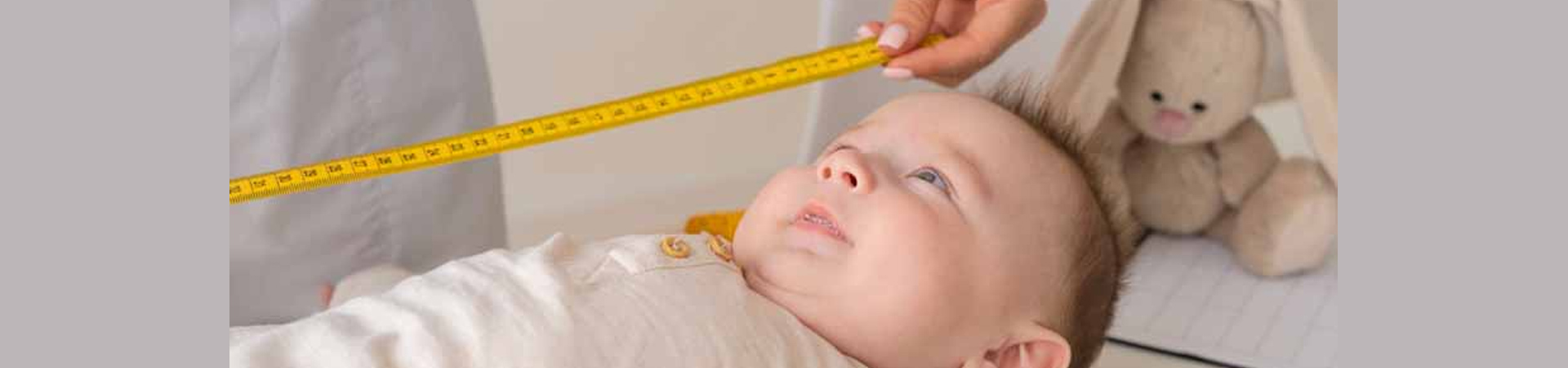
Neonatus provides a Circumference Measuring Tape with a flexible, non-stretch fibreglass core and a digital encoder that reads to 0.1 cm. The tape is placed around the infant’s head, passing across the glabella anteriorly and the most prominent point of the occiput posteriorly, and the reading is locked with a button press. The reading is transmitted to the same growth-monitoring application as the weight, and the occipitofrontal circumference OFC is plotted on the appropriate growth chart. Microcephaly OFC less than -2 SD or macrocephaly OFC greater than +2 SD triggers an alert to the paediatrician for neuroimaging and genetic workup.
For infants with suspected craniosynostosis, serial OFC measurements at 2-week intervals reveal a decelerating growth rate crossing percentiles, prompting a skull X-ray or CT scan. The device’s software overlays the infant’s head circumference trend on the weight and length trend, using the three-parameter dashboard to identify growth discordance for example a normal weight but a falling head circumference, a classic sign of developing hydrocephalus or intracranial pathology.
Technical Note: The tape must be positioned with the same tension at every measurement; tension should just overcome the slack without compressing the scalp. A tape pulled too tightly compresses the fontanelle and reduces the measured OFC by up to 0.5 cm, mimicking growth arrest. The tape’s encoder is tested monthly against a steel ruler; a deviation greater than 0.2 cm over 40 cm requires recalibration.
Neonatus equips the screening programme with the Handheld Audiometer – a portable, automated auditory brainstem response AABR screener designed for use on the postnatal ward. The device uses three self-adhesive electrode patches placed on the infant’s forehead and mastoid, and transmits a 35 dB nHL click stimulus via soft-tipped ear couplers. The internal algorithm compares the infant’s brainstem response to a normative template and returns a Pass or Refer result within 90 seconds per ear.
Every infant is screened before hospital discharge, ideally after 24 hours of age when the vernix has cleared from the ear canal. If the first screen yields a Refer in either ear, a second screen is performed 4 hours later, after the infant has been fed and is sleeping. Persistent bilateral Refer results trigger an appointment with the audiology centre for diagnostic auditory brainstem response testing within 2 weeks, scheduled automatically through the hearing screening database.
Technical Note: The screening must be conducted in a quiet room with ambient noise less than 50 dBA; higher noise levels can produce a false Refer. The electrode patches must have an impedance less than 5 kΩ, verified by the device before the test begins; high impedance due to oily skin requires gentle abrasion with an alcohol wipe. The disposable ear couplers are single-use to prevent cross-infection.
Neonatus’s cloud-enabled growth-monitoring platform links the Digital Baby Scale, the Circumference Measuring Tape, and the Handheld Audiometer. Each infant is registered with a unique identifier national health number or hospital record number. The platform stores every weight, OFC, and hearing screen result, generating a Growth and Development Passport that follows the child through the first 5 years of life.
The platform’s decision-support engine flags infants who meet referral criteria: weight-for-age z-score less than -3 severe underweight, needing admission for therapeutic feeding, OFC crossing two percentile lines downward urgent neuroimaging, or a confirmed hearing loss on diagnostic ABR urgent referral for cochlear implant assessment. A notification is automatically sent to the responsible paediatrician and the community health worker. The system also generates a monthly report for the district health office, aggregating the number of infants screened, the referral rate, and the follow-up completion rate.
Technical Note: The cloud platform must comply with national data protection regulations, with all identifiers encrypted at rest using AES-256. The API connecting the measurement devices must have a latency less than 500 ms; a timeout during data transfer causes the measurement to be cached locally on the device and re-sent when connectivity is restored.
Neonatus packages the Growth Assessment Kit with a comprehensive training module: a tablet-based interactive tutorial covering device operation, measurement technique, and data interpretation. The community health worker must complete the training and pass a practical exam before receiving certification to use the devices independently. The practical exam requires the health worker to measure the weight, OFC, and hearing of three infants under observation by a trained supervisor, with all measurements within 5% of the supervisor’s measurements.
An annual re-certification programme is delivered via a mobile learning app with video-based refresher modules and a quiz. The platform’s automated quality-check algorithm reviews each uploaded measurement for plausibility: a weight that increases by greater than 500 g overnight, an OFC that is identical for three consecutive visits, or a hearing screen with a Pass time of less than 30 seconds suggesting the test was not completed are flagged for supervisory review.
Technical Note: The practical exam must be retaken if the health worker fails to calibrate the scale before the measurement or fails to wait for the infant to settle before taking the weight. The quality-check algorithm is tuned to have a false-positive flag rate of less than 5% to avoid overwhelming supervisors with spurious alerts.
Subscribe to comprehensive perinatal and neonatal solutions from Neonatus. Elevate patient outcomes across prenatal clinics, delivery rooms, and NICUs with integrated, life-protecting systems.
© Nortek HealthCare Group Ltd., 2009-2026. All rights reserved.
This site operates under the laws of the People's Republic of China. Your access and use constitute acceptance of these Terms of Use and our Privacy Policy. All content is governed by our Privacy Notice. For details or inquiries, please Contact Us or use the site's search function.